What is New Construction Site Hydroseeding and how does it work?
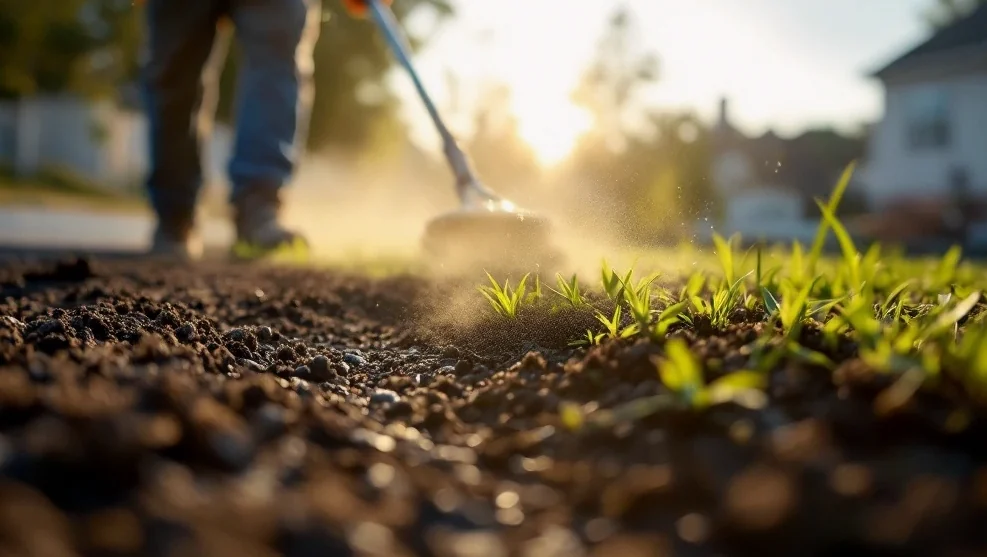
New construction site hydroseeding is a method of planting grass on bare dirt around a newly built home by spraying a slurry of seed, mulch, fertilizer, and water. It creates a stable lawn fast, controls erosion, and costs less than sod.
When your builder finishes a house in Huntsville, the yard is usually raw dirt. Grading leaves the soil compacted and uneven. Rain runs off that bare ground and carries topsoil into storm drains. Hydroseeding fixes that by putting down a layer that holds the dirt in place and grows grass at the same time.
The slurry gets mixed in a truck-mounted tank. A crew sprays it over the whole area with a hose. The mulch in the mix forms a blanket that keeps seeds from washing away and holds moisture so they germinate. In Huntsville's hot summers, that moisture retention matters a lot.
You can walk on a hydroseeded lawn after a few weeks. Full coverage usually takes four to six weeks depending on weather. Sod gives you instant grass but costs two to three times more. Hydroseeding gives you a thicker root system over time because the roots grow down into the soil instead of sitting on top of a sod layer.
The whole process takes a few hours for a typical lot. The crew shows up, sprays the yard, and leaves. You water it for the next few weeks. That is the basic deal.
How New Construction Site Hydroseeding works, step by step
The crew prepares the soil, mixes the slurry in a truck tank, sprays it evenly over the yard, and then you water it daily for about three weeks until the grass is established.
First, the yard needs to be ready. The builder should have rough-graded the lot so water drains away from the foundation. If there are low spots where water pools, the crew will fix those before spraying. They also remove rocks and debris bigger than your fist. A clean surface lets the slurry stick to the soil.
The hydroseeder truck arrives with a tank that holds water, seed, fertilizer, and wood or paper mulch. The driver fills the tank with water from a fire hydrant or a spigot on your property. Then they add the seed mix, which in Huntsville is usually a blend of tall fescue and Bermuda grass. Fescue handles the shade and cooler months; Bermuda fills in during the heat. The fertilizer is a starter blend high in phosphorus to push root growth.
The slurry gets agitated in the tank so everything stays mixed. The crew uses a hose with a nozzle to spray the yard in a fan pattern. They work in overlapping passes to get even coverage. A good crew will hit the edges twice because the wind can blow the slurry away from fence lines and foundations. They also spray a little heavier on slopes where erosion is worst.
After spraying, the mulch dries and forms a crust on top. That crust is what holds the seeds in place. If you get a heavy rain in the first 24 hours, the crust can break and the seed can wash into the street. That is why the crew will sometimes spray a second, lighter coat if a storm is coming.
Then it is your turn. You water the lawn every morning and evening for about 15 minutes per zone, keeping the crust damp but not soggy. Too much water and the seed rots. Too little and it dries out. After about two weeks you will see tiny grass blades. By week four you can mow it for the first time, setting the mower high so you do not scalp the new grass.
Why New Construction Site Hydroseeding matters for your home
Hydroseeding stops erosion around your new foundation, keeps mud out of your house, and gives you a thick, healthy lawn that prevents weeds and adds curb appeal. It also costs less than sod and grows deeper roots.
A bare dirt yard around a new house is a problem. Every time it rains, water carries soil down the driveway and onto the sidewalk. That soil ends up in the storm drains that feed Huntsville's creeks and the Tennessee River. The city can fine you for sediment leaving your property. Hydroseeding stops that by holding the dirt in place with the mulch blanket.
The mud also gets tracked into your house. If you have kids or dogs, you know what it is like to clean up after a rain. A hydroseeded lawn keeps that mud where it belongs, outside. It also keeps the dust down on dry days. Bare dirt turns to dust and blows into your windows and onto your porch.
Weeds love bare dirt. Crabgrass, nutgrass, and ragweed will move in within a week of the builder leaving. Once they take hold, you are fighting them for years. Hydroseeding gives you a thick stand of grass that crowds out the weeds before they get started. The fertilizer in the slurry gives your grass a head start that weeds cannot match.
Your home's value goes up with a finished yard. A hydroseeded lawn looks green and established within a month. That matters if you plan to sell in the first few years. It also matters if you just want to enjoy your backyard without looking at dirt and rocks.
The root system from hydroseeding is better than sod. Sod is grown on a farm, cut into strips, and laid on your dirt. The roots have to grow through that layer into the soil below. Hydroseeded grass grows from seed right in your soil, so the roots go deep from the start. That means your lawn is more drought-tolerant and less likely to die in a dry August.
Common problems and what causes them
Most problems come from bad grading, poor watering, or rain washing the seed away. Slopes, compacted soil, and the wrong seed mix also cause trouble. Each issue has a fix, but catching it early is key.
Bad grading is the biggest problem. If the builder left low spots, water pools there and drowns the seed. The grass will be thin or dead in those areas. You can fix it by having the crew fill those spots with topsoil before they spray. If you wait until after the grass is up, you have to dig it out and start over.
Compacted soil is common on new construction. Heavy equipment drives all over the yard during building, packing the dirt down hard. Grass roots cannot push through that. The crew should till the top few inches before spraying. If they do not, the seed germinates but the roots stay shallow and the grass dies in the first dry spell.
Watering mistakes cause more failures than anything else. Homeowners forget to water, or they water too much. The mulch crust needs to stay damp. If it dries out, the seed dies. If it stays wet, the seed rots. Set a timer and water twice a day for 15 minutes. Skip a day if it rains hard, but do not skip two days in a row.
Slopes are tricky. The slurry can slide downhill if the slope is steeper than about 3 to 1. The crew can spray a tackifier, which is a sticky additive that helps the mulch hold on. Without it, the seed ends up in a pile at the bottom of the hill. Ask the crew if they use tackifier on slopes before they start.
Wrong seed mix is rare with a good company, but it happens. A shade mix in full sun will burn up. A sun mix in shade will get thin and weedy. In Huntsville, a blend of tall fescue and Bermuda works for most yards. If your lot is mostly wooded, ask for a higher percentage of fescue. If it is wide open, go heavier on Bermuda.
Common questions about New Construction Site Hydroseeding
These are the questions Huntsville homeowners ask most often about hydroseeding a new construction yard.
Most yards get full coverage in four to six weeks. You will see the first blades in about two weeks. By week four you can mow. By week six it looks like a regular lawn.
You water twice a day for the first three weeks. Morning and evening, about 15 minutes per zone. After that you can cut back to once a day, then every other day as the grass gets established.
Yes, you can walk on it after two weeks if you are careful. No heavy traffic, no dogs, no kids playing. Wait until the first mow at week four for normal use.
Hydroseeding costs less than sod. Sod runs about double the price for materials and labor. Hydroseeding gives you a deeper root system and a more drought-tolerant lawn over time.
Yes, you can hydroseed in the fall. The best times in Huntsville are spring and fall. Summer works but you have to water more. Winter is too cold for germination.
The crew should remove large rocks and debris before spraying. You do not need to do anything special. Just make sure the yard is clean and the spigot works.
A typical quarter-acre lot takes about two to three hours to spray. The truck setup and mixing take another hour. The crew is usually gone by lunchtime.
Yes, the crew can add a weed preventer to the slurry. It stops weed seeds from germinating. It does not kill existing weeds, so the yard should be weed-free before spraying.
If the seed washes out, call the crew right away. They can come back and respray the bare spots. Most companies include one touch-up visit in the price. Ask about that before you hire them.
The mulch is usually wood fiber or paper. Both are biodegradable and break down over a few months. They do not need to be removed. They just become part of the soil.
Frequently Asked Questions
How long does it take for hydroseeded grass to grow?
You will see the first blades in about two weeks. Full coverage usually takes four to six weeks. By week four you can mow it for the first time.
Do I need to water the hydroseeded lawn?
Yes, you water twice a day for the first three weeks. Morning and evening, about 15 minutes per zone. After that you can cut back gradually.
Can I walk on the lawn after hydroseeding?
Wait at least two weeks before light foot traffic. No heavy use, no dogs, no kids playing until after the first mow at week four.
Is hydroseeding cheaper than sod?
Yes, hydroseeding costs less than sod. Sod runs about double the price. Hydroseeding also gives you deeper roots and better drought tolerance.
What time of year is best for hydroseeding in Huntsville?
Spring and fall are best. Summer works but you have to water more. Winter is too cold for the seed to germinate.
Do I need to prepare the yard before the crew comes?
The crew handles the prep. They remove large rocks and debris and fix low spots. Just make sure the yard is clean and the outside spigot works.
How long does the hydroseeding process take?
For a typical quarter-acre lot, the crew takes about two to three hours to spray. Setup and mixing add another hour. They are usually done by lunch.
Can the crew add something to prevent weeds?
Yes, they can add a weed preventer to the slurry. It stops weed seeds from germinating. The yard should be weed-free before spraying for best results.
What if the seed washes out in a heavy rain?
Call the crew right away. Most companies include one touch-up visit. Ask about that policy before you hire them.
What happens to the mulch after the grass grows?
The mulch breaks down naturally over a few months. It is biodegradable and becomes part of the soil. You do not need to remove it.
Need hydroseeding in Huntsville? Get a free estimate today.
📞 256-914-6298