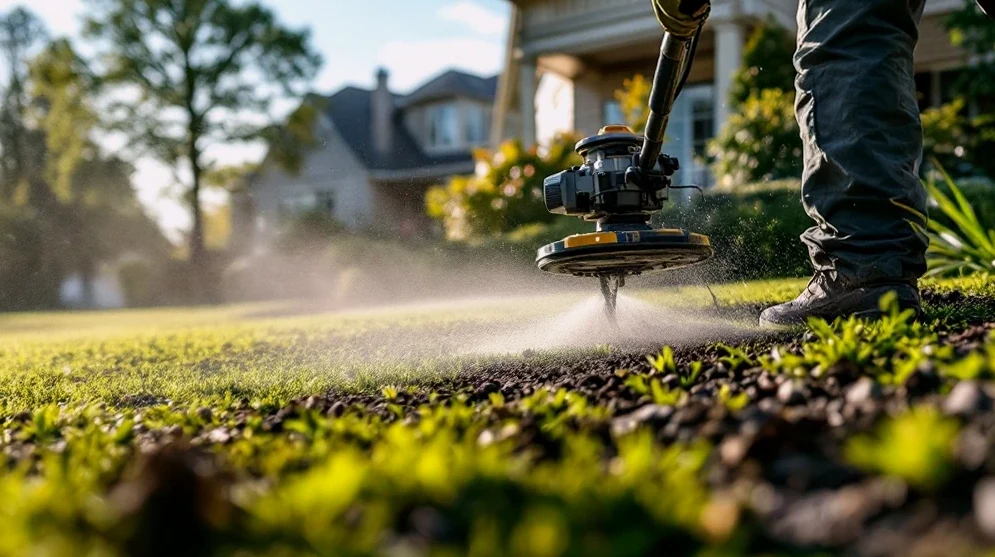
What is Hydroseeding and how does it work?
Hydroseeding is spraying a slurry of seed, mulch, fertilizer, and water onto bare soil. The mulch holds moisture, the fertilizer feeds the seed, and the whole mix sticks to slopes and uneven ground. It grows a lawn faster than dry seeding and costs less than sod.
Think of it as a mud milkshake for your yard. A truck-mounted tank holds the slurry, and a hose with a nozzle sprays it evenly across the soil. The green dye in the mix lets you see where you've been, so coverage is even. Within a week, you see tiny grass blades poking through the mulch blanket.
The mulch isn't decorative. It is the workhorse. It keeps the soil from washing away during a thunderstorm, shades the seed from the July sun, and holds water against the seed so it germinates instead of drying out. In Huntsville's clay-heavy soil, that moisture retention is the difference between a patchy mess and a thick lawn.
Hydroseeding works on flat front yards, sloped backyards, and anything in between. It conforms to the ground. If you have a ditch or a steep bank where a seed spreader would scatter seed into the street, hydroseeding sticks right where you aim it.
The process is fast. A crew can spray a half-acre lot in about an hour. Compare that to laying sod, which takes a full day for the same area and leaves you with pallets of rolled grass that can't sit in the sun too long. Hydroseeding gives you a head start without the backbreaking work.
How Hydroseeding works, step by step
The crew preps the soil, mixes the slurry in a truck-mounted tank, and sprays it evenly over the area. You water it daily for two to three weeks, then mow when the grass reaches three inches tall.
Step one is prep. The crew clears rocks, sticks, and big clods of dirt. They may rake the soil to loosen the top inch so the slurry can bond. If the dirt is hardpacked from construction equipment, they might run a tiller over it. Good prep is half the job.
Step two is mixing. The tank holds water, then they add seed, a wood-based or paper-based mulch, and a tackifier that makes the slurry sticky. The tackifier is key for slopes. Without it, the whole mix would slide downhill in the first rain. The green dye is added last so the crew can see their work.
Step three is spraying. The nozzle can reach 50 to 100 feet depending on the pump pressure. The crew sprays in overlapping passes to avoid thin spots. They work from the back of the property toward the street so they don't walk through the fresh spray. The whole area turns green, like someone painted the dirt.
Step four is watering. This is where homeowners mess up the most. The slurry needs to stay damp, not soaked. In Huntsville's heat, that means watering twice a day for the first ten days, once in the morning and once in the late afternoon. If you skip a day, the seed dries out and dies. If you drown it, the seed rots.
Step five is the first mow. Around day 14 to 21, the grass hits three inches tall. You mow it to two inches. That first cut tells the grass to tiller out and thicken. Do not mow shorter than two inches or you scalp the new roots. Use a sharp blade, and bag the clippings so they don't smother the young grass.
Why Hydroseeding matters for your home
Hydroseeding gives you a thick, erosion-resistant lawn in weeks instead of months. It costs a fraction of sod and works on Huntsville's red clay and slopes where dry seed washes away.
Huntsville's soil is mostly clay. That clay bakes hard in summer and turns to glue in winter rain. Dry grass seed sitting on top of clay gets washed into the gutter during the first storm. Hydroseeding's mulch blanket holds the seed in place and keeps the clay from crusting over, so the roots can actually push through.
If you live in a neighborhood with steep lots, like the hills around Monte Sano or the newer developments in Madison, you know the struggle of keeping soil on your slope. Hydroseeding's tackifier bonds the slurry to the slope. A dry seed spreader would leave bare spots at the bottom of the hill after every rain.
Cost is a big reason homeowners choose hydroseeding. Sod runs thousands of dollars for a quarter-acre yard, plus the labor to haul and lay it. Hydroseeding is typically half the price or less. You get a living lawn that roots into the soil rather than sitting on top of it like carpet on a floor.
The grass varieties used in Huntsville hydroseeding are chosen for our climate. A typical mix includes tall fescue for the cool months and Bermuda or zoysia for the heat. The crew matches the blend to your sun exposure. A shady yard gets a different mix than a full-sun yard. That custom blend is something you cannot get from a bag at the big-box store.
Common problems and what causes them
Most hydroseeding failures come from bad watering, poor soil prep, or the wrong seed mix. Birds eating the seed and heavy rain washing the slurry are also common issues in Huntsville.
The number one problem is watering. Homeowners either forget to water or they set the sprinkler on a timer and drown the seed. The slurry needs to stay damp like a wrung-out sponge. If it dries out, the seed dies. If it stays wet, the seed rots. In Huntsville's July heat, you might need to water three times on a 95-degree day. In April, twice is enough.
Poor soil prep shows up as patchy growth. If the crew sprayed over hardpacked clay without tilling, the slurry sits on top and the roots cannot penetrate. The grass looks good for two weeks, then it yellows and dies because the roots hit a brick wall. Good prep means loosening the top inch or two of soil.
Birds are a real nuisance. They eat the seed right out of the slurry. The green dye helps a little, but hungry birds do not care. A light layer of straw over the sprayed area keeps birds off. Some homeowners use bird netting, but straw is easier and breaks down into the lawn.
Heavy rain can wash the slurry into the street, especially on slopes. If the forecast shows a two-inch downpour, you want to delay the spray date. The tackifier helps, but it is not waterproof. A hard rain within 24 hours of spraying will leave gullies in your lawn. Wait for a dry window of at least 48 hours.
Wrong seed mix causes a lawn that looks great in spring and dies in August. If the crew uses a cool-season grass like fescue in a full-sun yard, it goes dormant in the heat. Make sure the mix includes a warm-season grass for Huntsville's summers. A good contractor asks about your sun exposure before mixing the tank.
Common questions about Hydroseeding
Here are answers to the questions Huntsville homeowners ask most often about hydroseeding.
How long until I can walk on the lawn? Wait until the grass is three inches tall, usually two to three weeks. Before that, the roots are fragile and your footprints will kill the seedlings. Keep kids and pets off until the first mow.
Can I hydroseed in the summer? Yes, but you have to water more. Huntsville's summer heat dries out the slurry fast. Plan to water three times a day if the temperature stays above 90. Spring and fall are easier because the rain helps keep things damp.
Will hydroseeding work on clay soil? Yes, but the soil needs to be loosened first. If you just spray over hard clay, the roots cannot dig in. The crew should rake or till the top inch before spraying. That step is non-negotiable for clay.
How long does the green dye last? The dye fades after about a week. It is cosmetic, not functional. The mulch and seed are still there even after the green is gone. Do not panic when the lawn turns brown. That is the dye washing away, not the seed dying.
Do I need to fertilize after hydroseeding? The slurry already contains starter fertilizer. Wait until after the first mow to add more. A balanced lawn fertilizer applied six weeks after spraying gives the grass a boost. Do not fertilize before the first mow or you burn the young roots.
What if it rains right after the spray? Light rain is fine. Heavy rain that causes runoff will wash the slurry. If the forecast shows a storm, reschedule. If it rains hard anyway, call the crew. They may need to respray the washed areas at a reduced cost.
How does hydroseeding compare to sod? Sod gives you an instant lawn but costs more and requires heavy labor. Hydroseeding takes two weeks to show grass but costs less and roots deeper. Sod is better if you need a lawn tomorrow. Hydroseeding is better if you want a lawn that lasts.
Can I hydroseed a patchy lawn instead of the whole yard? Yes. The crew can spot-spray bare areas. The new grass will blend with the existing lawn over time. The key is matching the seed mix to what you already have. Tell the crew what grass is growing now.
How do I prepare my yard for hydroseeding? Remove rocks, sticks, and debris. Mow existing weeds as low as possible. If the soil is compacted, till or rake it. The crew needs bare soil to bond with the slurry. Grass or weeds block the seed from reaching the dirt.
Will hydroseeding work on a slope? Yes, that is one of its best uses. The tackifier in the slurry makes it stick to slopes up to about 45 degrees. For steeper slopes, the crew may add extra tackifier or use erosion blankets on top of the spray.
Frequently Asked Questions
How long until I can walk on the lawn?
Wait until the grass is three inches tall, usually two to three weeks. Before that, the roots are fragile and your footprints will kill the seedlings. Keep kids and pets off until the first mow.
Can I hydroseed in the summer?
Yes, but you have to water more. Huntsville's summer heat dries out the slurry fast. Plan to water three times a day if the temperature stays above 90. Spring and fall are easier because the rain helps keep things damp.
Will hydroseeding work on clay soil?
Yes, but the soil needs to be loosened first. If you just spray over hard clay, the roots cannot dig in. The crew should rake or till the top inch before spraying. That step is non-negotiable for clay.
How long does the green dye last?
The dye fades after about a week. It is cosmetic, not functional. The mulch and seed are still there even after the green is gone. Do not panic when the lawn turns brown. That is the dye washing away, not the seed dying.
Do I need to fertilize after hydroseeding?
The slurry already contains starter fertilizer. Wait until after the first mow to add more. A balanced lawn fertilizer applied six weeks after spraying gives the grass a boost. Do not fertilize before the first mow or you burn the young roots.
What if it rains right after the spray?
Light rain is fine. Heavy rain that causes runoff will wash the slurry. If the forecast shows a storm, reschedule. If it rains hard anyway, call the crew. They may need to respray the washed areas at a reduced cost.
How does hydroseeding compare to sod?
Sod gives you an instant lawn but costs more and requires heavy labor. Hydroseeding takes two weeks to show grass but costs less and roots deeper. Sod is better if you need a lawn tomorrow. Hydroseeding is better if you want a lawn that lasts.
Can I hydroseed a patchy lawn instead of the whole yard?
Yes. The crew can spot-spray bare areas. The new grass will blend with the existing lawn over time. The key is matching the seed mix to what you already have. Tell the crew what grass is growing now.
How do I prepare my yard for hydroseeding?
Remove rocks, sticks, and debris. Mow existing weeds as low as possible. If the soil is compacted, till or rake it. The crew needs bare soil to bond with the slurry. Grass or weeds block the seed from reaching the dirt.
Will hydroseeding work on a slope?
Yes, that is one of its best uses. The tackifier in the slurry makes it stick to slopes up to about 45 degrees. For steeper slopes, the crew may add extra tackifier or use erosion blankets on top of the spray.
Need hydroseeding in Huntsville? Get a free estimate today.
📞 256-914-6298