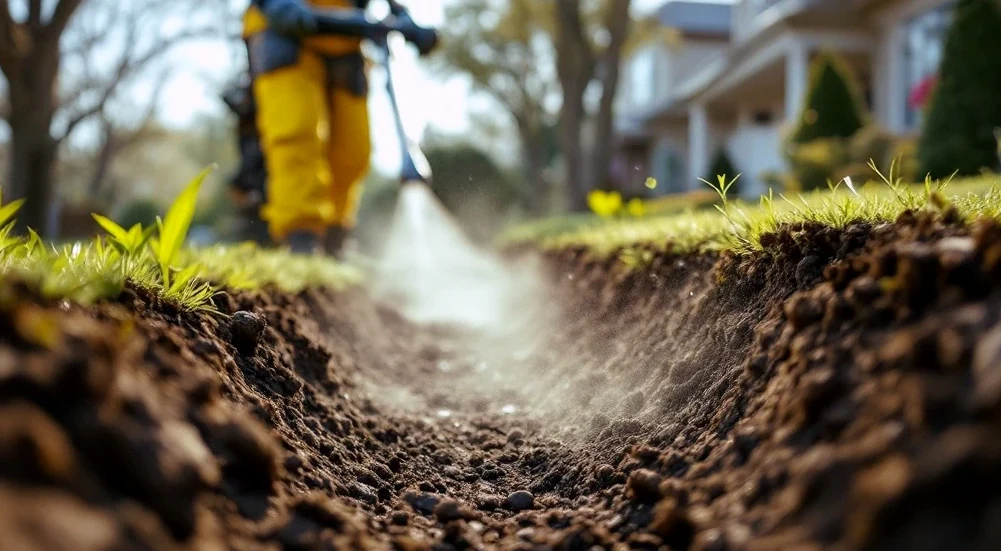
What is Erosion Control Hydroseeding and how does it work?
Erosion control hydroseeding is a spray-on system that combines seed, mulch, fertilizer, and a tackifier to hold soil in place on slopes and bare ground. It forms a protective mat that germinates fast and stops runoff before it carves gullies.
Standard hydroseeding is about getting grass to grow. Erosion control hydroseeding is about keeping dirt where it belongs while the grass gets established. The difference is the tackifier, a sticky organic binder that glues the mulch fibers to the soil surface. Without it, a hard rain on a 3:1 slope will wash seed and topsoil straight into the gutter.
Huntsville clay is the real challenge. It drains slow, crusts over when dry, and turns into slick mud when wet. A plain grass seed mix on bare clay will mostly wash downhill before it sprouts. Erosion control hydroseeding uses a heavier mulch load and a longer-lasting tackifier to lock everything down for the three to four weeks it takes for roots to grab hold.
The mix itself is thicker than a standard lawn slurry. It has more fiber, usually a bonded wood or paper mulch that forms a continuous blanket. The tackifier can be a plant-based guar gum or a synthetic polymer. For Huntsville's summer storms, we lean toward the synthetic tackifiers because they hold up under two-inch-an-hour downpours without breaking down too fast.
This is not a quick cosmetic fix. It is a structural solution for bare dirt that is actively moving. If you have a new retaining wall backfill, a fresh cut on a hillside lot, or a ditch bank that keeps sloughing off, this is the method that works without needing netting or straw blankets.
How Erosion Control Hydroseeding works, step by step
First we prep the ground, then we mix the slurry with a higher tackifier ratio, and spray it on in one pass. The tackifier bonds the mulch to the soil, creating a flexible crust that sheds raindrop impact and holds seed in place.
Step one is site prep. We clear loose rocks, break up any crusted clay, and rake the surface to leave a rough texture, not smooth. Smooth dirt lets water sheet off and carry seed with it. Rough dirt gives the slurry something to grab onto. On a steep slope we may cut small contour trenches, called berms, to slow runoff at the top before it ever hits the sprayed area.
The slurry goes into a 3000-gallon hydroseeder tank. For erosion control we bump up the mulch content to about 2500 pounds per acre versus the usual 1500 for a lawn. The tackifier gets added at the manufacturer's heavy rate, usually around 60 pounds per acre. Water, seed, fertilizer, and a soil stabilizer go in next. The whole batch recirculates for ten minutes until it is a thick, soupy paste.
Spraying is one smooth pass. The nozzle operator works in overlapping lanes, keeping the hose tip about 15 feet from the ground. A good operator reads the slope and adjusts the spray pattern so the thickest slurry lands on the steepest spots. On a flat area the mix can be lighter; on a 45-degree bank we lay it on heavy enough to see a half-inch coating.
Within 24 hours the tackifier begins to cure. It forms a thin, flexible film over the mulch fibers. That film is what stops raindrops from blasting the soil loose. Seed stays trapped in the fiber mat. The mulch holds moisture against the clay so the seed can germinate even during a dry stretch. By day ten you see the first green fuzz. By week four the roots are deep enough that the tackifier has done its job and the grass takes over.
- Prep includes removing debris and roughing the soil surface.
- Slurry mix uses a higher mulch-to-water ratio than standard hydroseeding.
- Tackifier is the key ingredient that binds everything to the slope.
- Application is a single, continuous pass with overlapping coverage.
- Curing happens in 24 hours; germination starts around day ten.
Why Erosion Control Hydroseeding matters for your home
Uncontrolled erosion undermines foundations, clogs drainage systems, and turns your yard into a muddy mess. Erosion control hydroseeding stops that before it starts, saving you from costly grading repairs and foundation work down the road.
Huntsville sits on the Tennessee Valley floor with ridges and hollows all around. A lot of homes are built on cut-and-fill lots where the builder scraped a flat pad out of a hillside. The fill dirt on those slopes is loose and has no root structure. One good thunderstorm can wash a six-inch-deep gully down that slope and dump mud onto your patio or into your neighbor's yard.
That runoff does not just make a mess. It carries sediment into the storm drains that feed into the Tennessee River and its tributaries. The city and county take sediment control seriously. If a neighbor complains about muddy water running across their property, you could end up with a code enforcement visit. Erosion control hydroseeding keeps that dirt on your land where it belongs.
For new construction, the bare dirt around a house is the most vulnerable it will ever be. The topsoil is gone, the subsoil is compacted from heavy equipment, and rainwater hits it with full force. A straw blanket works but it is expensive to install on steep slopes and it can shift or tear. Erosion control hydroseeding conforms to every contour and does not leave gaps.
There is also the long-term health of your lawn. If you just throw seed on bare clay without erosion control, most of it washes to the low spots. You end up with patchy grass, weeds moving into the bare areas, and a yard that needs reseeding every spring. A single erosion control hydroseeding application establishes a thick, uniform stand that holds for years.
Common problems and what causes them
Most failures come from poor site prep, wrong seed mix, or rain hitting the slurry before the tackifier cures. A few other mistakes show up regularly and they are easy to avoid once you know what to look for.
The biggest problem is spraying onto smooth, compacted clay. If the soil is slick from a previous rain or packed down by equipment, the slurry just sits on top and slides off when water runs over it. The fix is to scarify the surface with a rake or a tractor tiller before spraying. That gives the tackifier something to lock into.
Another common issue is using a standard lawn seed blend on a shady, wet slope. Fescue needs full sun. If your erosion area is under a tree line or on the north side of the house, the fescue will thin out by midsummer and leave bare spots that erode again. A proper erosion control mix includes a shade-tolerant species like creeping red fescue or a native warm-season grass that matches the site conditions.
Timing matters more than people think. Spraying in late October in Huntsville can work, but the seed needs soil temperatures above 50 degrees to germinate. If a cold snap hits right after application, the seed sits dormant and the tackifier breaks down from UV exposure before the seed ever sprouts. Spring and early fall are the safe windows. Summer works if you commit to watering twice a day.
Overwatering is a real problem. People see the slurry drying out and hit it with a sprinkler for an hour. That can wash the tackifier film right off. The right approach is a light misting, just enough to keep the surface damp, for the first two weeks. After that, water normally. Too much water early on also promotes fungus in the thick mulch layer, which kills the seedlings before they get established.
- Smooth, compacted soil causes the slurry to slide off.
- Wrong seed mix leads to thin coverage and re-erosion.
- Cold weather after application delays germination and degrades tackifier.
- Heavy watering washes the tackifier film away.
Common questions about Erosion Control Hydroseeding
Need hydroseeding in Huntsville? Get a free estimate today.
📞 256-914-6298